Ask any New Orleanian to name their city’s most iconic food, and you’ll hear three things: gumbo, oysters, and po’boys. This legendary sandwich — crispy French bread stuffed with fried seafood, roast beef, or just about anything delicious — is as much a part of New Orleans as jazz music and Mardi Gras. But what exactly is a po’boy, and how did it become the city’s most beloved sandwich?
Jump to the Flavor
The History of the Po’Boy
The po’boy was born in 1929 during the New Orleans streetcar strike. Brothers Bennie and Clovis Martin — former streetcar conductors turned restaurant owners — offered free sandwiches to striking workers at their French Market coffee stand. Whenever a striker walked in, someone would call out, “Here comes another poor boy!” The name stuck, and the po’boy became a New Orleans institution.
The Martins served their sandwiches on long loaves of New Orleans French bread — the same light, crispy bread that defines an authentic po’boy to this day. Over the decades, the sandwich evolved from a simple roast beef filling to include the fried seafood versions that New Orleans seafood restaurants and oyster bars are now famous for.
What Makes a Po’Boy Different from a Sub?
Don’t make the mistake of calling a po’boy a sub — locals will correct you quickly. Here’s why they’re completely different:
| Feature | Po’Boy | Sub / Hoagie |
|---|---|---|
| Bread | New Orleans French bread (crispy crust, airy interior) | Italian roll (dense, chewy) |
| Fillings | Fried seafood, roast beef, hot sausage | Cold cuts, cheese, veggies |
| Served | Hot, usually fried or with gravy | Often cold |
| Origin | New Orleans, 1929 | Northeastern US |
| “Dressed” | Lettuce, tomato, mayo, pickles | Similar but no “dressed” tradition |
The bread is everything. New Orleans French bread has a paper-thin, shatteringly crispy crust with a soft, cottony interior that absorbs sauces without getting soggy. You simply cannot make an authentic po’boy without it.
Classic Po’Boy Fillings
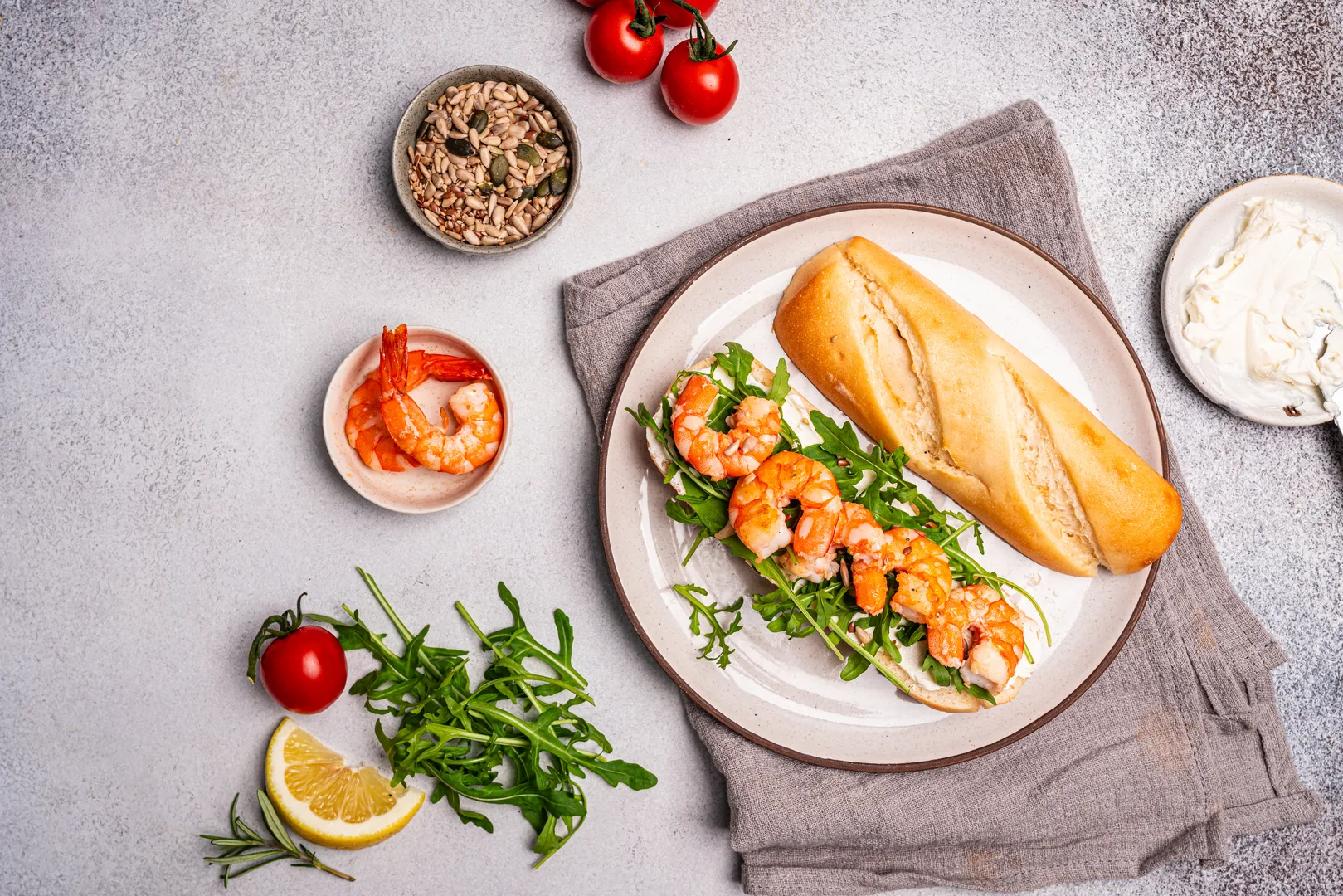
While you can put almost anything on a po’boy, these are the iconic New Orleans fillings:
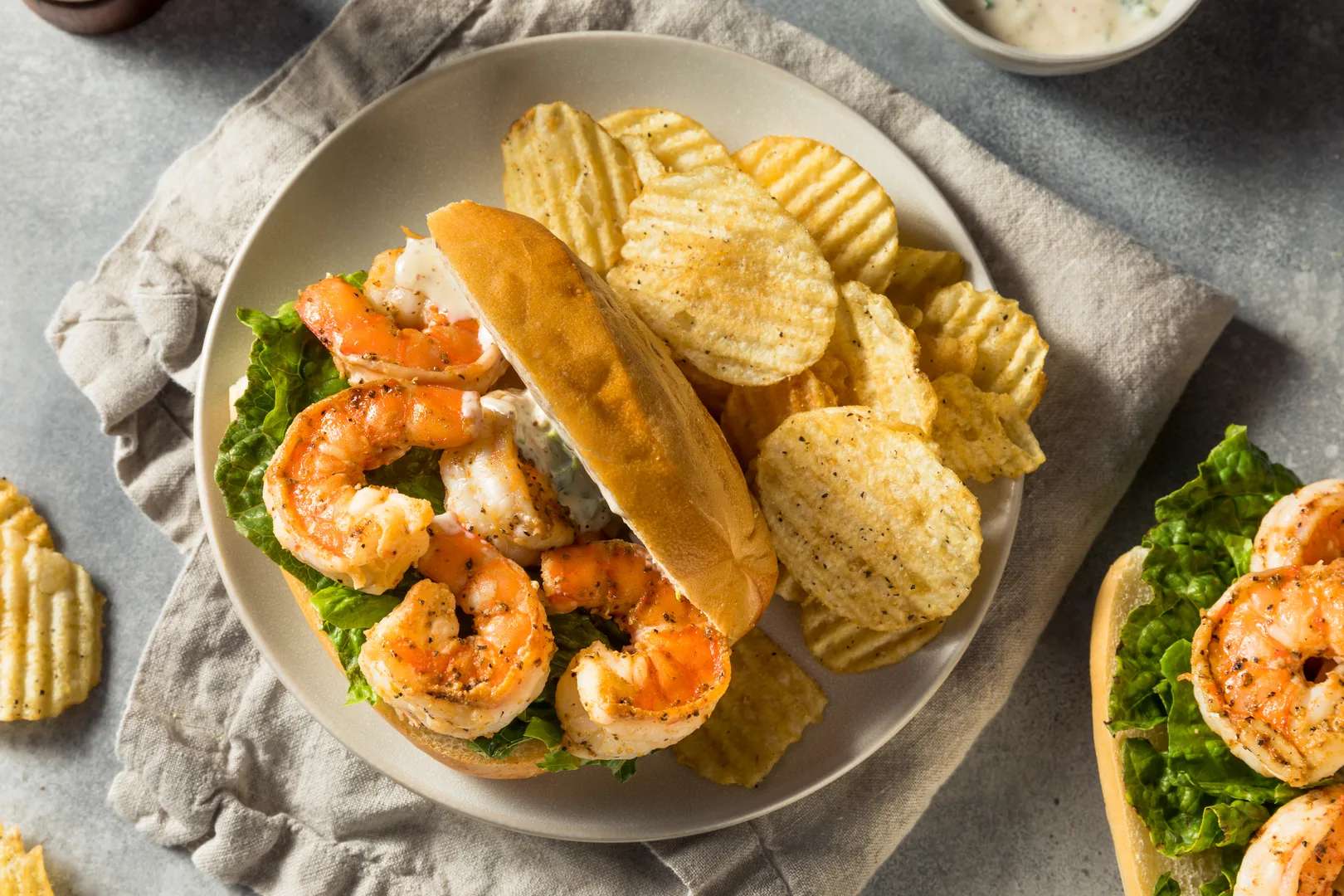
Fried Shrimp Po’Boy
The king of po’boys. Gulf shrimp are battered in seasoned cornmeal and fried until golden and crunchy, then piled high on French bread and “dressed” with lettuce, tomato, mayo, and pickles. It’s the most popular order at New Orleans seafood restaurants.
Fried Oyster Po’Boy
Plump Gulf oysters, cornmeal-crusted and fried crispy on the outside, creamy on the inside. An oyster po’boy is the perfect way to enjoy oysters if you’re not ready for them raw — and it’s a signature dish at any New Orleans oyster bar.
Roast Beef Po’Boy (Debris)
Slow-roasted beef in rich, dark gravy, shredded and piled onto French bread. “Debris” refers to the bits of meat that fall into the gravy during roasting. It’s messy, indulgent, and deeply satisfying — pure Creole food comfort.
Soft-Shell Crab Po’Boy
A whole soft-shell crab, battered and fried, served on French bread. It’s seasonal (spring through fall) and unforgettable — one of the most unique seafood sandwiches you’ll ever eat.
Catfish Po’Boy
Cornmeal-crusted catfish fillets, fried golden and served dressed. A Cajun cuisine classic that’s popular across Louisiana.
“Dressed” vs. “Undressed” — How to Order
When you order a po’boy in New Orleans, you’ll be asked: “Dressed?” Here’s what that means:
- Dressed: Comes with lettuce, tomato, mayo, and pickles — the classic way
- Undressed: Just the bread and filling, no toppings
Most locals order dressed. Hot sauce (Crystal or Tabasco) on the side is also standard at New Orleans seafood restaurants.
Po’Boys at Gallier’s Seafood & Oyster Bar
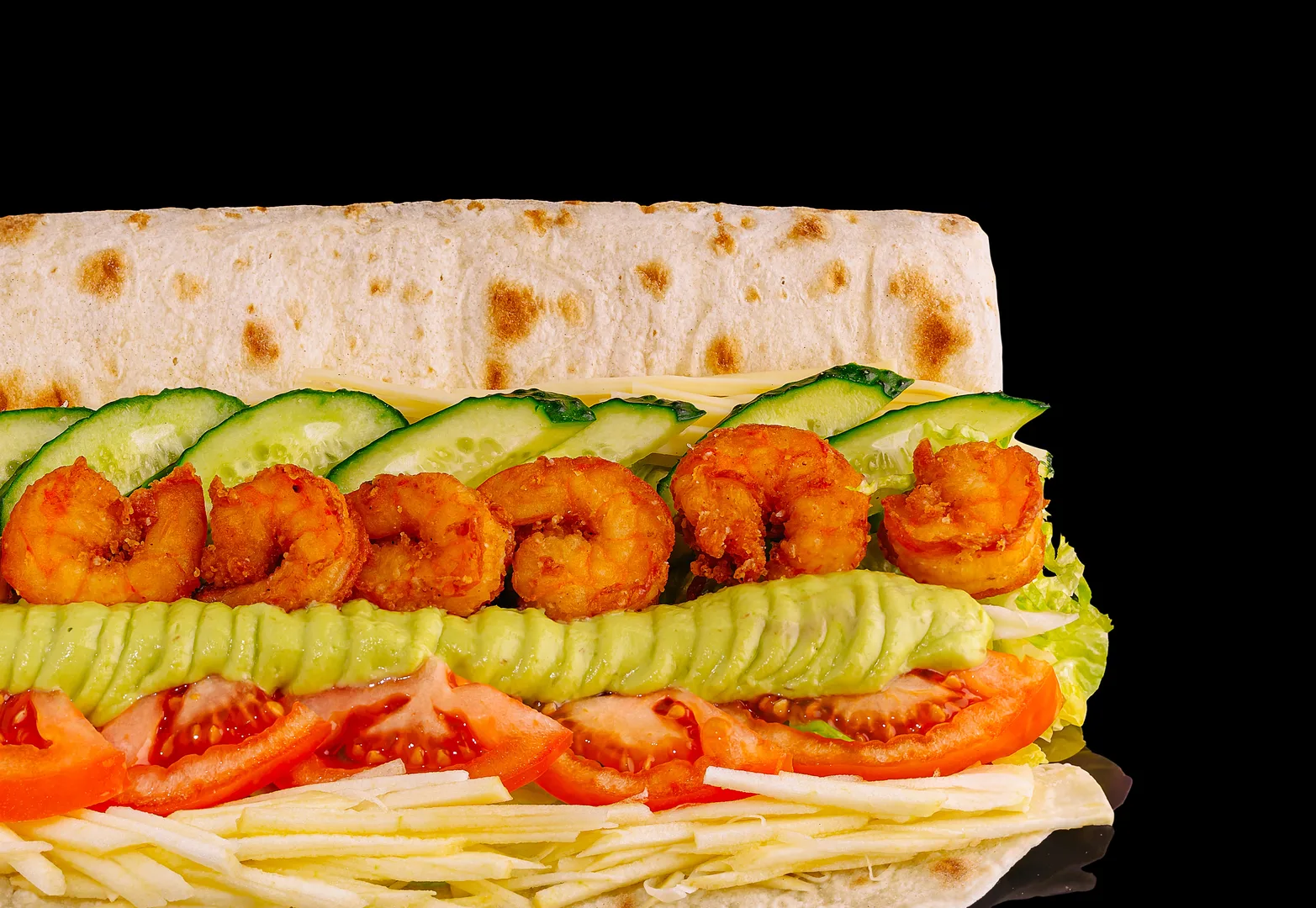
At Gallier’s Seafood & Oyster Bar, our po’boys are made with fresh French bread and the finest Gulf seafood. Our fried shrimp and oyster po’boys are among the most popular items on our menu — perfectly crispy, generously stuffed, and dressed the traditional way.
Pair your po’boy with a cup of our famous gumbo, a dozen charbroiled oysters, or a cold beer at our oyster bar. It’s the quintessential New Orleans lunch.
Looking for the best po’boys near me and a top seafood restaurant in New Orleans? Reserve your table at 129 Carondelet St.
More New Orleans Food Guides
- What Is Creole Food? A Deep Dive
- What Is Boudin? Louisiana’s Cajun Sausage
- Shrimp, Crab, Crawfish: What’s the Difference?
- New Orleans’ Favorite Dishes
- Oyster Etiquette 101
Frequently Asked Questions About Po’Boys
What is a po’boy sandwich?
A po’boy is a traditional Louisiana sandwich served on crispy New Orleans French bread. Classic fillings include fried shrimp, oysters, catfish, roast beef, or soft-shell crab. It originated in New Orleans in 1929 during the streetcar workers’ strike.
Why is it called a po’boy?
The name comes from “poor boy.” During the 1929 New Orleans streetcar strike, restaurant owners Bennie and Clovis Martin served free sandwiches to striking workers — calling them “poor boys.” The sandwich and its name became a New Orleans legend.
What is the difference between a po’boy and a sub?
Po’boys use New Orleans-style French bread (crispy outside, fluffy inside), while subs use Italian rolls. Po’boys are typically fried seafood or roast beef served hot, not cold cuts. The bread is what makes a po’boy unique.
What are the most popular po’boy fillings?
Fried shrimp, fried oyster, roast beef with gravy (debris), catfish, soft-shell crab, and cochon de lait (roasted pork) are the most popular po’boy fillings at New Orleans seafood restaurants and oyster bars.
Where can I find the best po’boys in New Orleans?
Gallier’s Seafood & Oyster Bar at 129 Carondelet St serves crispy shrimp and oyster po’boys on fresh French bread, alongside our famous oyster bar, gumbo, and Cajun seafood.