
If you’ve ever sat down at a white-tablecloth restaurant in the French Quarter and watched a sizzling platter of baked oysters arrive at the next table, chances are you were looking at Oysters Rockefeller. It’s one of the most famous dishes ever created in New Orleans — and one of the most iconic seafood preparations in the world. Born in 1899, this dish is rich, herbaceous, and undeniably decadent. It was named after John D. Rockefeller, the wealthiest man in America at the time, because nothing else could properly describe the sheer richness of the sauce blanketing each oyster. More than 125 years later, Oysters Rockefeller remains a cornerstone of New Orleans cuisine, and at Gallier’s, we’re proud to serve our own take on this legendary dish.
Jump to the Flavor
The Origin Story: Antoine’s Restaurant, 1899
The story of Oysters Rockefeller in New Orleans begins, like so many great culinary stories, with a problem and a creative solution. In 1899, Jules Alciatore — the son of Antoine Alciatore, founder of the legendary Antoine’s Restaurant in the French Quarter — found himself facing an unexpected shortage. French escargot, which had been a staple of the restaurant’s menu, was becoming increasingly difficult to source. Rather than remove the dish entirely, Jules looked to what was abundant right outside his door: plump, briny Gulf oysters.
He placed fresh oysters on the half shell, topped them with a lush green sauce made from a closely guarded blend of herbs, butter, and local ingredients, then broiled them until the sauce bubbled and turned golden at the edges. The result was extraordinary — so extraordinarily rich, in fact, that Jules declared only one name could do it justice: Rockefeller, after John D. Rockefeller, the oil magnate who was then the richest person in America.
The original recipe remains one of the most closely guarded secrets in American culinary history. Antoine’s has never publicly revealed the exact ingredients, and the restaurant claims that every imitation — no matter how good — is just that: an imitation. What we do know is that the dish took New Orleans by storm, spreading from Antoine’s dining room to oyster bars and fine-dining establishments across the city, the South, and eventually the entire country.
What’s in Oysters Rockefeller?
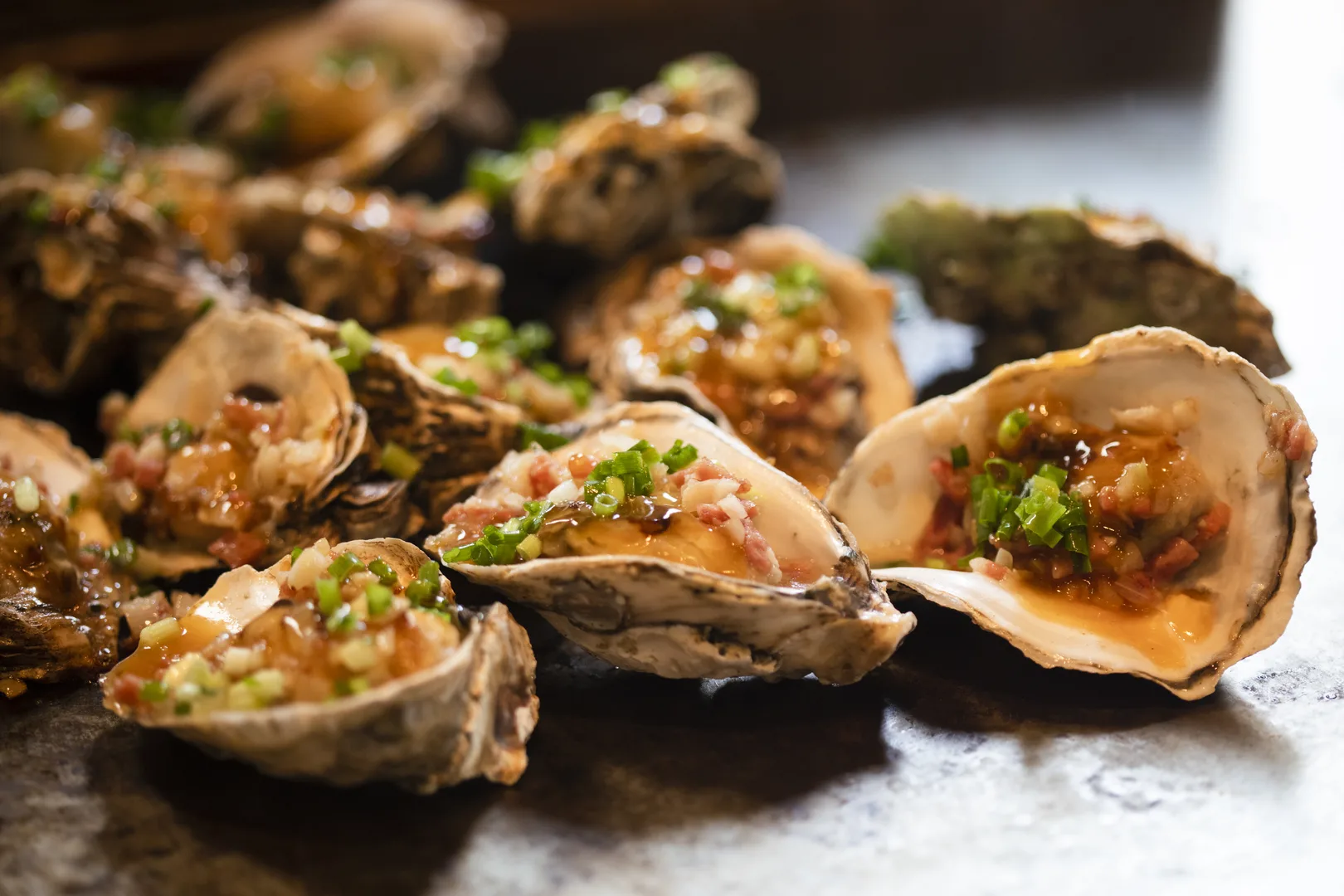
While the original recipe at Antoine’s remains a mystery, generations of New Orleans chefs have developed their own interpretations. The beauty of Oysters Rockefeller is that its core concept is simple — fresh oysters, an herbaceous sauce, a crispy topping, and intense heat — but the details are where each kitchen puts its stamp. Here’s what goes into the dish as most people know it today.
The Oyster
Everything starts with the oyster itself. For an authentic Oysters Rockefeller New Orleans experience, you need Gulf oysters — large, plump, and impeccably fresh. These oysters are shucked and served on the half shell, nestled in a bed of rock salt to keep them stable during broiling. The oyster provides the essential briny, mineral foundation that the rich sauce plays against. Without a great oyster, the dish falls flat. That’s why sourcing matters enormously, and it’s why we work with trusted Gulf suppliers to ensure every oyster that hits our raw bar meets the standard this dish demands.
The Sauce
The sauce is the soul of Oysters Rockefeller — and the subject of the most passionate debates in New Orleans food circles. At its core, the sauce is a vibrant, herbaceous green blend. Most modern versions include some combination of parsley, celery, green onion, and generous amounts of butter. One ingredient that shows up in nearly every respected recipe is Herbsaint — a locally produced anise-flavored liqueur that replaced absinthe after Prohibition and has become synonymous with this dish. The Herbsaint adds a subtle, aromatic note of licorice that lifts the entire preparation without overpowering it.
Some versions include watercress, tarragon, or chervil. Others lean heavily on green onion tops for color and flavor. The sauce is typically pureed smooth, enriched with butter until it’s luxuriously thick, and spooned generously over each oyster before broiling.
The Topping
Before the oysters go under the broiler, they get a finishing layer that’s crucial to the dish’s appeal: a dusting of fine breadcrumbs and grated Parmesan cheese. This topping serves two purposes. First, it creates an irresistible golden, crispy crust that contrasts beautifully with the creamy sauce and tender oyster beneath. Second, it helps hold the sauce in place during the intense heat of the broiler. When everything comes together — the breadcrumbs toasted and crunchy, the cheese melted and slightly browned, the sauce bubbling around the edges — you have one of the most satisfying bites in all of Southern cuisine.
The Spinach Debate
Now, here’s where things get interesting. Ask ten New Orleans chefs what is Oysters Rockefeller made with, and you’ll get at least three different answers about one ingredient: spinach.
Antoine’s Restaurant has stated plainly and repeatedly that the original Oysters Rockefeller recipe does not contain spinach. They’ve said it publicly, they’ve written it in their cookbook, and they maintain that the inclusion of spinach is a widespread misconception. The original sauce, they insist, gets its green color from other herbs entirely.
And yet, the vast majority of modern Oysters Rockefeller recipes — from home kitchens to celebrated restaurants — include spinach as a primary ingredient. It makes practical sense: spinach provides body, color, and a mild flavor that acts as a canvas for the herbs and butter. Many chefs argue that spinach-based versions are not only delicious but have become the accepted standard.
Where do we stand? Both camps are right. The Antoine’s version is historically authentic. The spinach-forward version is what most diners expect and love. The truth is that both interpretations are delicious, and the ongoing debate only adds to the dish’s mystique and its deep roots in New Orleans food culture.
Oysters Rockefeller vs. Other Oyster Preparations
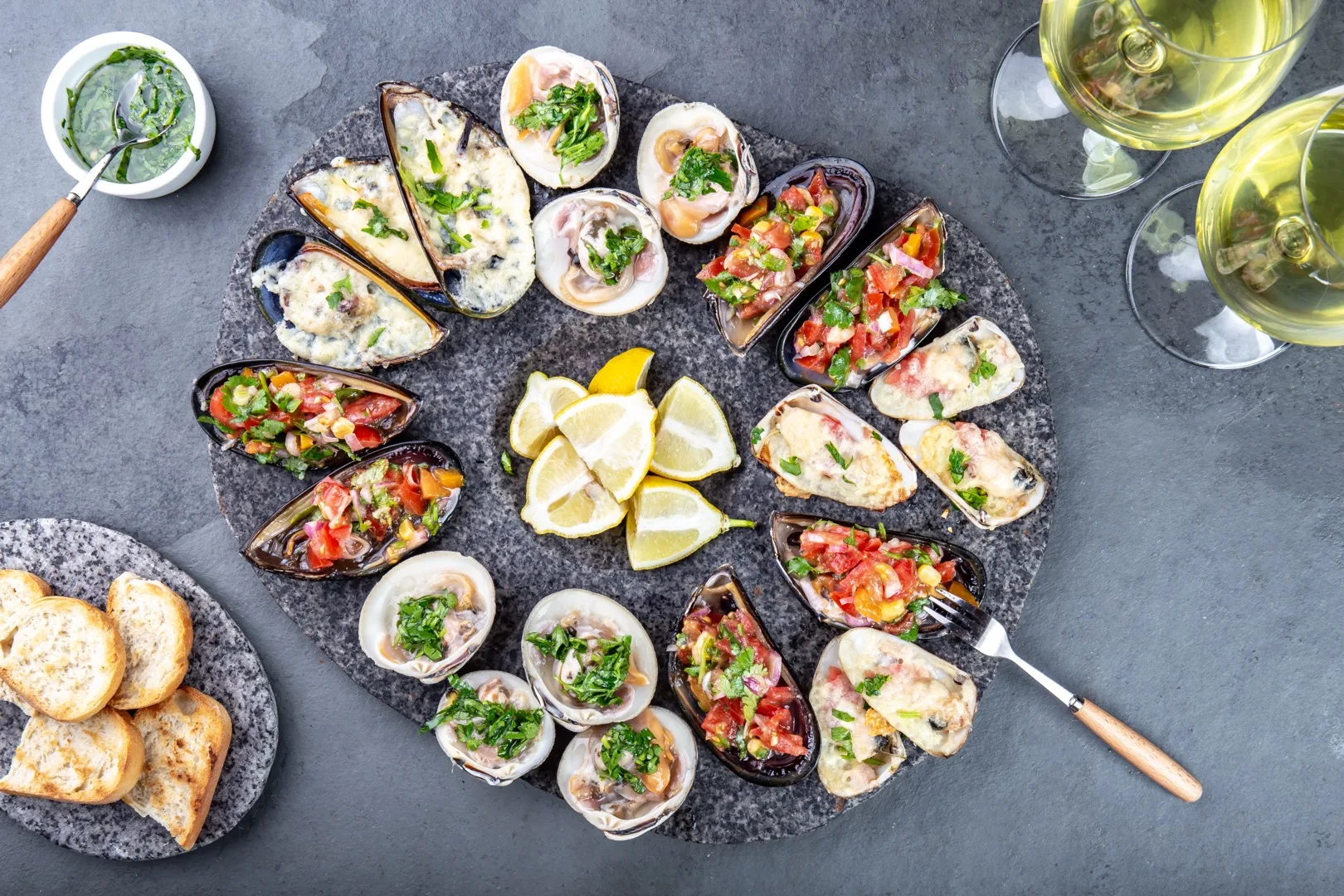
New Orleans is an oyster city through and through. We eat them raw, baked, fried, charbroiled, and in po’boys. Oysters Rockefeller is just one preparation in a rich tradition, and understanding how it compares to the others helps you appreciate what makes it special.
Oysters Rockefeller vs. Charbroiled Oysters
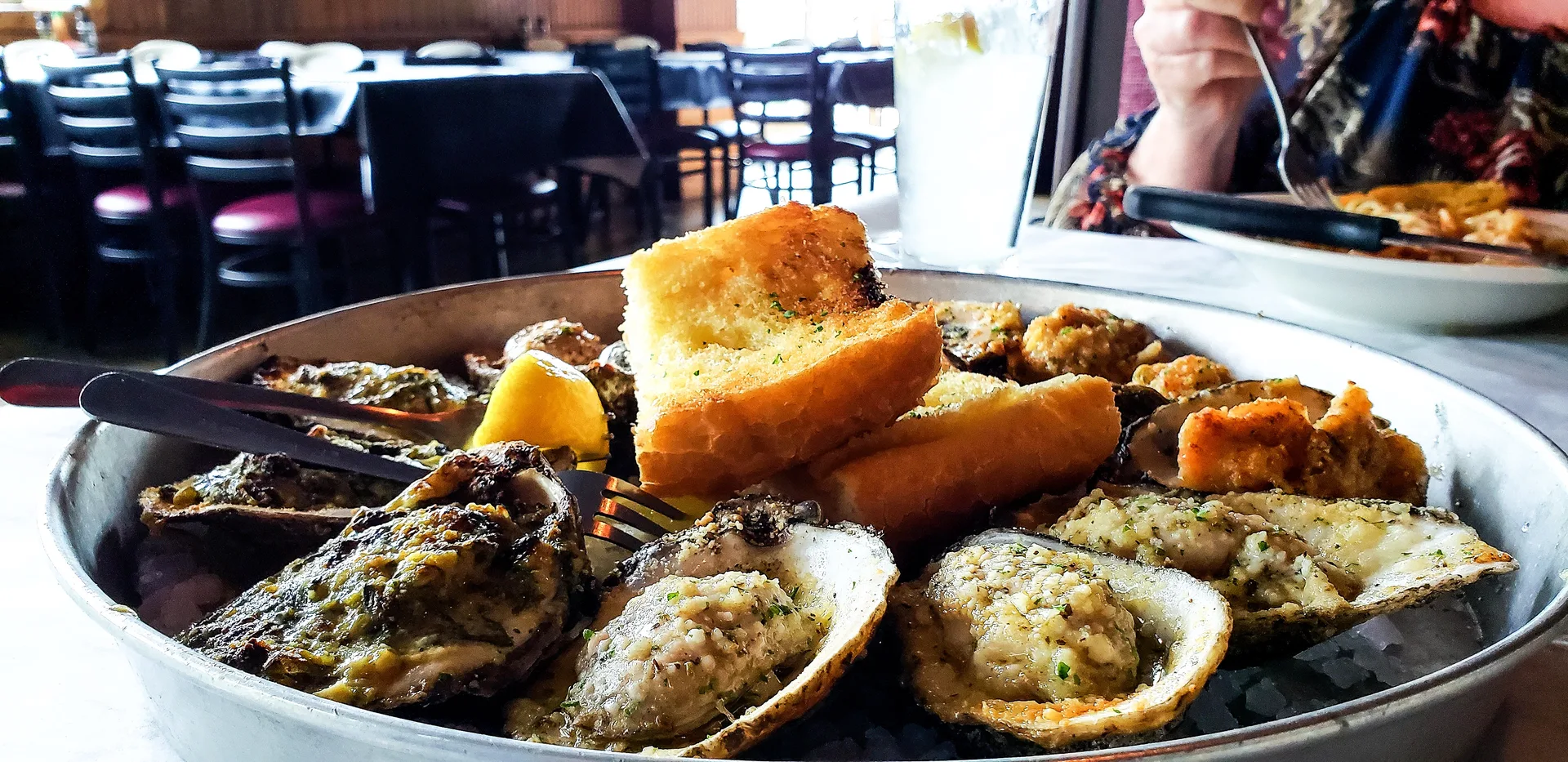
If you’ve visited New Orleans in the last two decades, you’ve almost certainly encountered charbroiled oysters — the bold, garlicky, butter-drenched preparation that has become just as iconic as Rockefeller in many circles. Charbroiled oysters are cooked directly on a hot grill, basted with garlic butter, Parmesan, and Italian herbs, producing a smoky, intensely savory result with charred edges and pools of melted cheese.
The key difference comes down to character. Oysters Rockefeller is refined and herbaceous — there’s complexity in the sauce, a touch of anise, a breadcrumb crust that adds elegance. Charbroiled oysters are bold, direct, and unapologetically rich. Think of Rockefeller as the dish you’d order at a white-tablecloth French Quarter restaurant, and charbroiled as the one you’d devour on a patio with cold beer in hand. Both are essential New Orleans experiences.
Oysters Rockefeller vs. Raw Oysters
Comparing Oysters Rockefeller to raw oysters is like comparing a symphony to a solo — both are beautiful, but they’re completely different experiences. Raw oysters are all about purity: the clean, briny taste of the Gulf, a squeeze of lemon, maybe a dash of horseradish or mignonette. There’s nothing to hide behind. Oysters Rockefeller, by contrast, transforms the oyster into something warm, layered, and indulgent. If you’re new to oysters and find the idea of eating them raw a bit intimidating, Rockefeller is an outstanding entry point — you get all the oceanic flavor with the comfort of a cooked, richly sauced dish.
Oysters Rockefeller vs. Oysters Bienville
Oysters Bienville is another classic New Orleans baked oyster preparation that deserves recognition. Created at Antoine’s as well (some culinary historians point to Arnaud’s), Bienville tops the oyster with a sherry-spiked cream sauce loaded with shrimp, mushrooms, and sometimes crabmeat, finished with breadcrumbs and broiled. Where Rockefeller is green, herbal, and butter-forward, Bienville is golden, creamy, and seafood-rich. If you see both on a menu, our honest recommendation is to order both — they complement each other beautifully, and together they tell the full story of New Orleans’ baked oyster tradition.
Why Oysters Rockefeller Endures
In a culinary world that constantly chases trends, it’s remarkable that a dish created in 1899 still commands real estate on menus from New Orleans to New York to San Francisco. But when you think about what Oysters Rockefeller actually delivers, the longevity makes perfect sense.
The combination is timeless: a briny, plump oyster provides the ocean. Rich, herbaceous butter sauce delivers depth and warmth. Crispy breadcrumbs and melted cheese add texture and satisfaction. A whisper of anise from Herbsaint ties everything together with aromatic elegance. Every bite hits multiple notes — salt, richness, crunch, herbal brightness — in a way that few dishes manage so effortlessly.
There’s also the romance of the thing. Oysters Rockefeller carries with it more than a century of New Orleans history, French Quarter glamour, and culinary mythology. Ordering it connects you to Jules Alciatore’s kitchen in 1899, to the grand dining rooms of the French Quarter, and to the generations of chefs and diners who have kept this dish alive. In New Orleans, food is never just food — it’s story, identity, and tradition. Oysters Rockefeller embodies all three.
And then there’s the simple fact that it works. The Gulf of Mexico provides a seemingly endless supply of beautiful oysters. The technique is straightforward. The ingredients are accessible. And the result — every single time — is a dish that makes people close their eyes and nod. That’s why Oysters Rockefeller isn’t going anywhere.
How We Serve Oysters Rockefeller at Gallier’s
At Gallier’s, we respect the tradition while bringing our own perspective to the plate. Our Oysters Rockefeller starts with the freshest Gulf oysters we can source — large, firm, and full of that clean, briny flavor that makes Gulf oysters world-famous. Each one is carefully shucked and set on the half shell, ready to receive our house-made herb sauce.
Our sauce follows the spirit of the original: a vibrant blend of fresh herbs, green onion, butter, and just enough Herbsaint to give it that signature anise warmth. We finish each oyster with a light breadcrumb crust and slide them under the broiler until the tops are golden, bubbly, and just barely beginning to char at the edges. The result is a dish that honors 125 years of New Orleans tradition while reflecting what we do best at our oyster bar.
If you’re visiting our raw bar for the first time, Oysters Rockefeller is a perfect way to begin your meal — or pair it with a half-dozen raw oysters and our charbroiled preparation for a complete tour of how New Orleans does oysters. For more on navigating the oyster experience, take a look at our beginner’s guide to eating oysters in New Orleans. And be sure to check our full menu for the complete range of what we’re serving.
Pairing Oysters Rockefeller
The rich, herbaceous character of Oysters Rockefeller calls for a beverage pairing that can cut through the butter while complementing the briny oyster and aromatic sauce. Here are our top recommendations.
Dry white wine is the classic choice. A crisp Muscadet from the Loire Valley is a natural match — its mineral, almost saline quality echoes the oyster’s brininess while its bright acidity slices through the butter. Chablis, with its flinty elegance and restrained fruit, is another excellent partner that lets the dish’s herbal complexity shine.
Champagne or sparkling wine is arguably the ultimate pairing. The effervescence acts as a palate cleanser between each rich, buttery bite, and the toasty notes of a good Champagne harmonize beautifully with the broiled breadcrumb crust. If you want to feel like you’re dining in the French Quarter circa 1920, a coupe of Champagne alongside a platter of Oysters Rockefeller is the way to do it.
Cold beer — specifically a crisp pilsner, a light lager, or a dry wheat beer — is the more casual but equally satisfying option. The carbonation and clean finish of a good beer work hand in hand with the richness of the dish, and there’s something perfectly New Orleans about pairing broiled oysters with an ice-cold beer at a neighborhood oyster bar.
For a complete New Orleans meal, consider starting with Oysters Rockefeller and following it with a bowl of gumbo or a seafood entree. The progression from the light, herbal richness of the oysters to the deep, complex flavors of a Creole gumbo or blackened fish is one of those meal sequences that makes eating in this city unlike anywhere else.
Try Oysters Rockefeller at Gallier’s
Ready to taste the original New Orleans oyster dish? There’s no better way to experience Oysters Rockefeller than at a bustling oyster bar in the heart of the city, where the tradition was born and where it’s still served with pride every single day.
Join us at 129 Carondelet St, New Orleans, LA 70130. Call (504) 267-5672 or reserve your table to guarantee your spot. Explore our full menu to see the complete lineup of raw, baked, and charbroiled oyster preparations alongside our Creole-inspired seafood dishes.
Whether you’re a lifelong oyster lover or trying them for the very first time, Oysters Rockefeller at Gallier’s is one of those New Orleans experiences you won’t forget.