
In New Orleans, Mondays mean red beans and rice. It’s not just a dish on a menu or a recipe in a cookbook — it’s a tradition that’s been feeding this city for well over a century. Walk into any restaurant, any neighborhood kitchen, any corner joint on a Monday afternoon, and you’ll find a pot of red beans simmering away, filling the room with the deep, smoky aroma of andouille sausage, garlic, and slow-cooked goodness. This is one of those dishes that tells you exactly where you are. If you’re eating red beans and rice, you’re in New Orleans — and you’re eating the way this city has always eaten.
At Gallier’s, we believe understanding a dish means understanding the story behind it. So let’s talk about where this tradition comes from, what makes a truly great pot of red beans, and why this humble Monday meal became one of the most iconic dishes in American cuisine.
Jump to the Flavor
The Monday Tradition: Why Red Beans on Monday?
The story of red beans and rice on Monday goes back to the 19th century, and it starts not in the kitchen but in the laundry room. Monday was wash day in New Orleans — the day when women across the city hauled out the heavy linens, scrubbed them by hand on washboards, and hung everything out to dry in the Louisiana heat. It was backbreaking, all-day work, and there was no time to stand over a stove preparing an elaborate meal.
The solution was elegant in its simplicity. Before starting the wash, you’d put a pot of dried kidney beans on the stove with whatever was left from Sunday’s dinner — usually a ham bone, still rich with smoky meat and marrow. You’d add water, throw in some onion, maybe a few cloves of garlic, and let the whole thing simmer on low heat for hours. The beans needed no supervision. They cooked themselves, slowly breaking down into a thick, creamy stew while the ham bone gave up every last bit of its flavor.
By the time the laundry was done, dinner was ready. A pot of rich, protein-packed beans ladled over a mound of steaming white rice — it was cheap, it was nourishing, and it was absolutely delicious. The Monday tradition in New Orleans was born out of necessity, but it endured because the dish was simply too good to give up, even after washing machines made laundry day a thing of the past.
To this day, restaurants across the city — from fine dining spots to neighborhood cafes — put red beans and rice on the menu every Monday. It’s one of those unwritten rules of New Orleans life. You don’t question it. You just eat.
What Goes Into a Perfect Pot of Red Beans
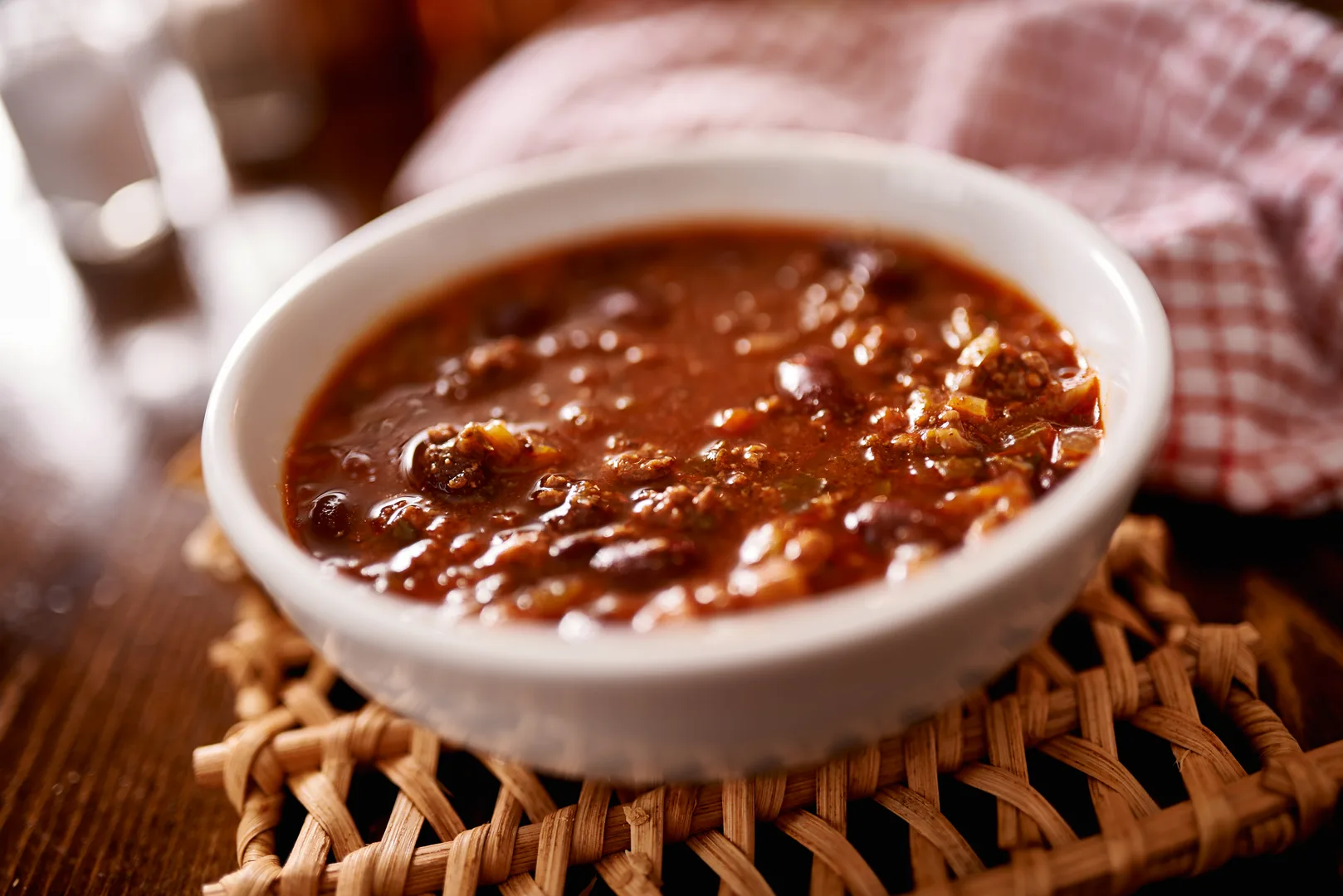
A great pot of New Orleans red beans isn’t complicated, but it demands respect for the ingredients and, above all, patience. There are no shortcuts to a proper pot of red beans. The magic happens when simple ingredients are given the time to meld together into something far greater than the sum of their parts.
The Holy Trinity
Every great Creole dish starts with the holy trinity — onion, celery, and bell pepper. These three aromatics form the flavor foundation of red beans and rice, just as they do for gumbo, jambalaya, and étouffée. The onion provides sweetness and depth, the celery adds an earthy backbone, and the bell pepper brings a gentle brightness that balances the richness of the beans and meat. They’re diced fine and sweated down in oil or rendered pork fat until they’re soft and fragrant — the first layer of flavor in a dish that builds layers all day long.
Andouille Sausage and Smoked Meat
If the trinity is the foundation, then the smoked meat is the soul of the pot. Andouille sausage is the most essential addition — a coarse-ground, heavily smoked pork sausage seasoned with garlic and pepper that’s been a staple of Louisiana cooking for generations. Sliced into thick rounds or half-moons, andouille releases its smoky, spicy oils into the simmering beans, infusing the entire pot with a depth of flavor that can’t be replicated with any other ingredient.
Many traditional cooks go even further. A smoked ham hock adds gelatin and body to the broth, giving the beans that signature velvety texture. Pickled pork — a salt-cured cut that’s increasingly hard to find outside Louisiana — adds a tangy, salty punch. And tasso, a heavily seasoned and smoked pork product unique to Cajun country, brings an almost aggressive smokiness that some cooks swear by. The best pots of red beans often use a combination of two or three smoked meats, building complexity with each one.
Kidney Beans and the Long Simmer
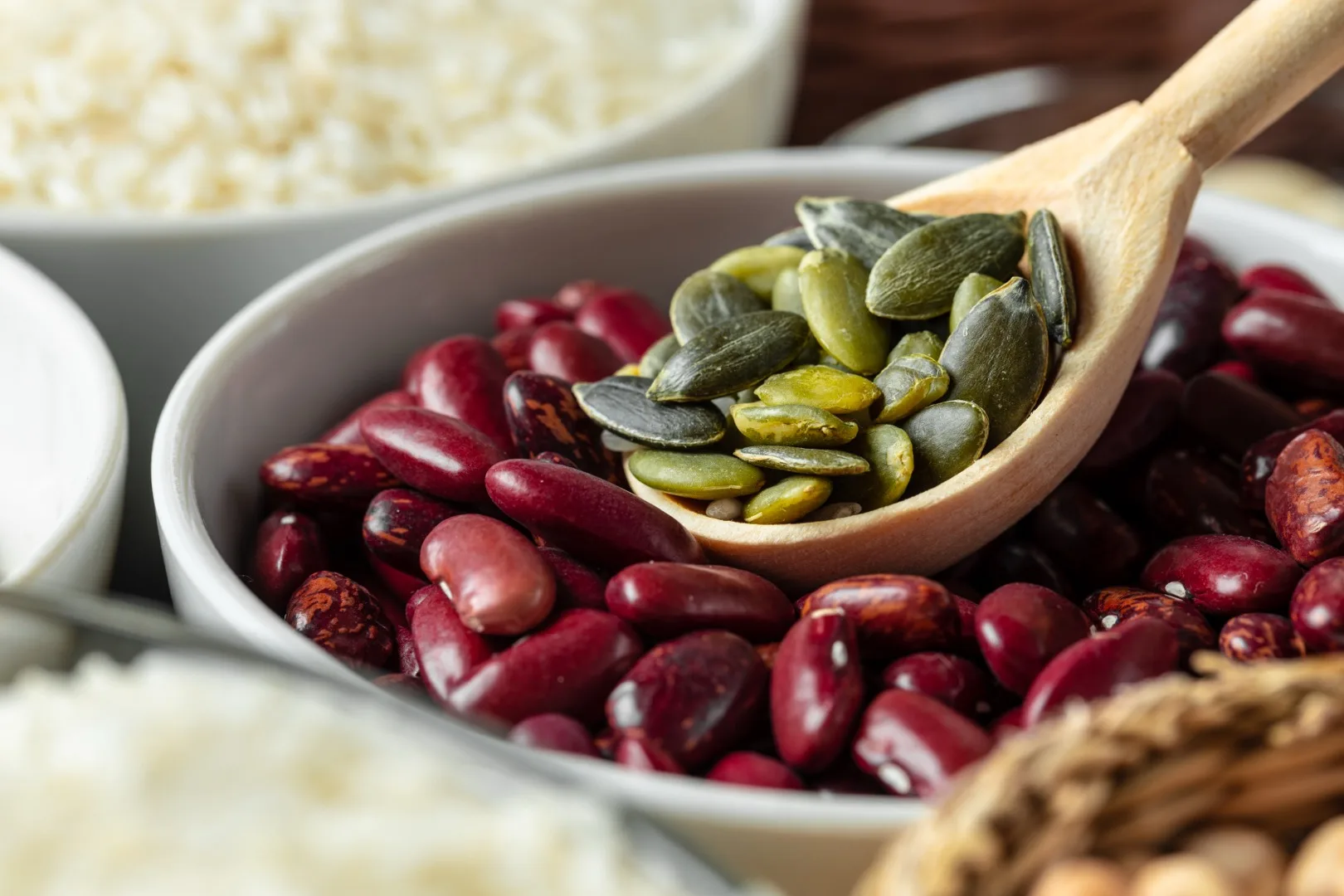
The star of the dish is, of course, the beans themselves — specifically, small red kidney beans (sometimes called Camellia beans, after the beloved Louisiana brand). Most traditional cooks soak their beans overnight, though some skip this step and just cook them longer. Either way, the beans go into the pot with plenty of water or stock and are brought to a steady simmer.
Here’s where time becomes the secret ingredient. A proper pot of red beans and rice needs at least three hours of slow cooking, and four or five is better. As the beans soften, some of them begin to break apart, thickening the liquid into a creamy, starchy sauce that clings to the rice. Experienced cooks will mash a portion of the beans against the side of the pot with a wooden spoon — this is what gives New Orleans-style red beans their characteristic creaminess, that luxurious texture that distinguishes a great pot from an ordinary one.
Seasoning: The Final Layers
The seasoning in red beans is understated but essential. Bay leaves go in early, simmering with the beans from the start and lending their subtle, herbal depth to the broth. Fresh thyme — or dried, in a pinch — adds an earthy warmth that complements the smokiness of the meat. Garlic is non-negotiable, and plenty of it. Most cooks add several cloves, minced or pressed, letting them dissolve into the sauce.
Then there’s hot sauce. In New Orleans, a pot of red beans without a few generous shakes of Louisiana-style hot sauce is practically incomplete. Crystal or Tabasco are the traditional choices, adding vinegar-forward heat that cuts through the richness and ties everything together. A splash goes in during cooking, and the bottle stays on the table for people to add more at will. Black pepper, a touch of cayenne, and salt to taste round things out — simple, purposeful seasoning that lets the ingredients speak for themselves.
Creole Red Beans vs. Cajun Red Beans
If you spend any time talking about Louisiana food, you’ll inevitably run into the Cajun vs. Creole distinction, and red beans and rice is no exception. While both traditions produce outstanding versions of this dish, there are real differences in approach and flavor profile.
Creole red beans — the New Orleans city style — tend to be creamier and more refined. The beans are cooked until they’re very soft, with a good portion mashed to create that silky, thick sauce. The seasoning is layered and balanced, often featuring a wider variety of herbs and aromatics. Creole cooks might add a splash of Worcestershire sauce, a pinch of oregano, or even a bit of tomato paste for added complexity. The result is a sophisticated, deeply savory dish that reflects the city’s multicultural culinary heritage — French, Spanish, African, and Caribbean influences all simmered together in one pot.
Cajun red beans, by contrast, tend to be rustier and more straightforward. The country-style approach leans heavily on smoked meats and bold spice, often with a more noticeable kick of cayenne and black pepper. The beans might be left a bit more intact, with a thinner, brothier sauce. There’s a directness to Cajun red beans — a no-frills quality that prioritizes smoke and heat over subtlety. Pickled pork and tasso are more common in Cajun versions, and the overall character tends to be earthier and more robust.
Which is better? That’s a question that can start an argument in any Louisiana kitchen, and we’re not about to settle it here. Both styles are legitimate, both are delicious, and both reflect the deep culinary traditions of their respective communities. The truth is, most home cooks in Louisiana don’t think of their red beans as strictly Creole or Cajun — they just cook them the way their family always has, which usually borrows from both traditions.
Red Beans and Rice in New Orleans Culture
Red beans and rice isn’t just food in New Orleans — it’s a cultural institution. No conversation about this dish is complete without mentioning Louis Armstrong, the legendary jazz musician and New Orleans native who loved red beans and rice so deeply that he signed his personal letters “Red Beans and Ricely Yours.” That wasn’t a gimmick or an affectation. Armstrong grew up eating red beans in a poor neighborhood of New Orleans, and the dish remained a comfort and a connection to home throughout his entire life, even after he became the most famous musician in the world.
Armstrong’s devotion to red beans speaks to something fundamental about the dish: it’s a great equalizer. Red beans and rice is working-class food that crossed every boundary in a city defined by its divisions. Rich and poor, Black and white, uptown and downtown — everyone in New Orleans eats red beans and rice. It’s served in white-tablecloth restaurants and in shotgun houses. It’s on the menu at tourist spots on Bourbon Street and at neighborhood joints that don’t even have a sign out front. It costs almost nothing to make, feeds a crowd, and tastes like home no matter who you are.
This universality is part of what makes red beans and rice so central to New Orleans identity. It’s not a showpiece dish like a seafood tower or a bananas Foster. It’s everyday food, the kind of thing that sustains a city through ordinary days and extraordinary ones. After Hurricane Katrina, when New Orleanians were scattered across the country, one of the first things many of them did was cook a pot of red beans. It was a way of holding onto who they were, of carrying New Orleans with them wherever they ended up.
How We Serve Red Beans at Gallier’s
At Gallier’s, we take our red beans seriously — because in this city, you have to. Our red beans are slow-cooked in the traditional New Orleans style, simmered for hours until the beans are impossibly creamy and the broth is thick and rich with the flavor of andouille sausage and smoked pork. We use quality kidney beans, a generous helping of the holy trinity, and enough garlic to make the kitchen smell like heaven all afternoon.
We serve our red beans the classic way: ladled over a mound of fluffy long-grain white rice, with sliced andouille sausage on top and a scattering of fresh green onions for brightness. It’s simple, honest, and deeply satisfying — the kind of plate that makes you close your eyes and nod. It’s comfort food in the truest sense, the kind that fills your belly and warms your spirit, and we’re proud to serve it alongside the rest of our menu of New Orleans classics.
We don’t reserve our red beans just for Mondays, either. This dish is too good to eat only once a week, and we believe our guests should be able to enjoy the tradition whenever the craving strikes. Whether you’re a lifelong New Orleanian who grew up eating red beans every Monday or a first-time visitor discovering the dish for the first time, we want your bowl at Gallier’s to be exactly what New Orleans red beans should taste like — slow-cooked, soulful, and unforgettable.
Pairing Red Beans with Other New Orleans Classics
Red beans and rice is a complete meal on its own, but that’s never stopped anyone in New Orleans from adding a few extras to the table. The most traditional accompaniment is cornbread — golden, slightly sweet, with a crumbly texture that’s perfect for soaking up the creamy bean sauce. Some people prefer it with butter, others crumble it directly into the bowl, and both approaches are completely correct.
Fried seafood is another natural companion. A few crispy fried shrimp or a piece of fried catfish alongside your red beans turns a Monday dinner into something special. And if you really want to go all in, pair your red beans with a classic New Orleans po’boy — a hot sausage po’boy or a fried oyster po’boy sits beautifully next to a bowl of creamy beans.
Hot sauce, of course, is essential. Every table in New Orleans has a bottle within arm’s reach, and red beans demand a few extra shakes to bring up the heat and acidity. Crystal Hot Sauce is the local favorite, though Tabasco has its loyal partisans as well. Sweet tea rounds out the meal perfectly — its cool sweetness is the ideal counterpoint to the smoky, spicy richness of the beans. And if you’re feeling indulgent, a cold beer — particularly a local brew — pairs beautifully with the heartiness of the dish.
Taste the Tradition at Gallier’s
Red beans and rice is more than a recipe. It’s a piece of New Orleans history in every bowl — a dish born from resourcefulness, perfected by generations of home cooks, and loved by an entire city. From the smoky richness of the andouille to the creamy texture of the slow-simmered beans to the simple satisfaction of fluffy white rice, every element of this dish reflects the spirit of New Orleans: generous, unpretentious, and deeply flavorful.
Come taste New Orleans’ favorite Monday tradition any day of the week. Visit us at 129 Carondelet St, New Orleans, LA 70130. Call (504) 267-5672 or make a reservation. See our full menu and discover why Gallier’s is the place to experience the real flavors of this extraordinary city.