Few dishes capture the heart of Louisiana cuisine quite like jambalaya. This iconic rice-based dish is a melting pot of cultures and flavors, reflecting the French, Spanish, African, and Native American influences that define the region\’s food. But ask any local in Louisiana, and they’ll tell you—there isn’t just one kind of jambalaya. There are two distinct styles: Creole and Cajun.
Jump to the Flavor
Creole Jambalaya: The “Red” City Version
Creole jambalaya, often called red jambalaya, originates from New Orleans and other urban centers of Louisiana. Its defining characteristic? Tomatoes. This addition likely comes from Spanish paella influences, brought to the city during Spanish rule. The tomatoes give the dish a rich reddish hue and a slightly tangy flavor that complements seafood beautifully.
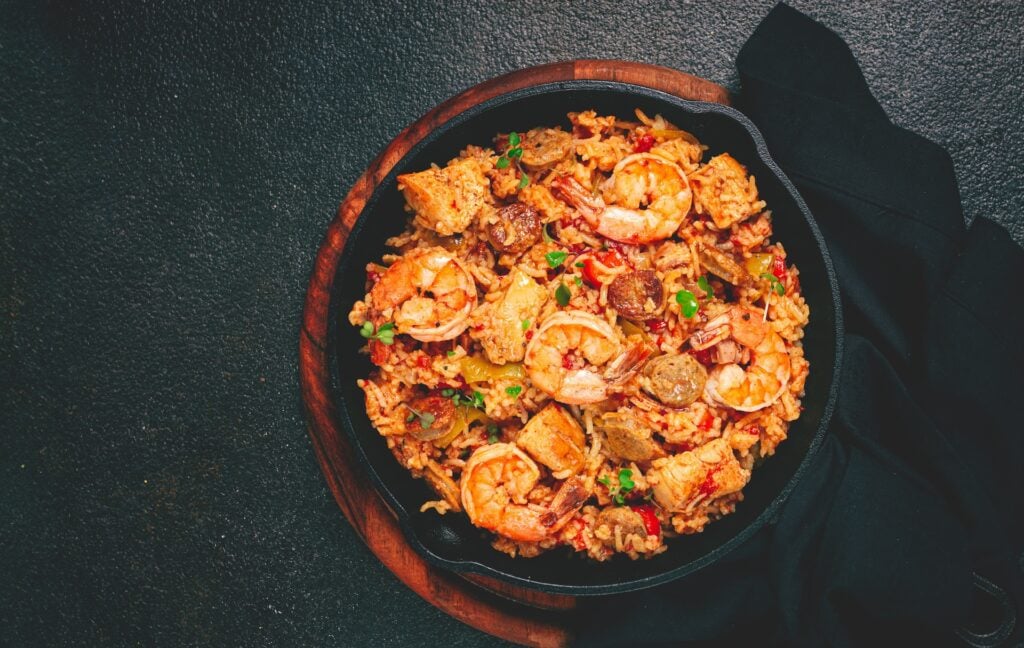
Typical Ingredients in Creole Jambalaya
- Seafood such as shrimp, crab, or oysters
- Smoked sausage (like andouille)
- Chicken or other meats
- Tomatoes and tomato paste
- “Holy Trinity” vegetables: onions, celery, and bell peppers
- Long-grain rice
- Creole seasonings with herbs like thyme and oregano
Creole jambalaya is often cooked in layers—first browning the meat, then adding vegetables, rice, stock, and tomatoes, allowing the flavors to meld together in a single pot.
Cajun Jambalaya: The “Brown” Country Version
Cajun jambalaya, also called brown jambalaya, hails from the rural bayous and small towns of southern Louisiana. Unlike its Creole cousin, it does not include tomatoes. Instead, the deep brown color comes from browning the meat and allowing those flavorful bits (fond) at the bottom of the pot to infuse the rice with smoky, savory richness.
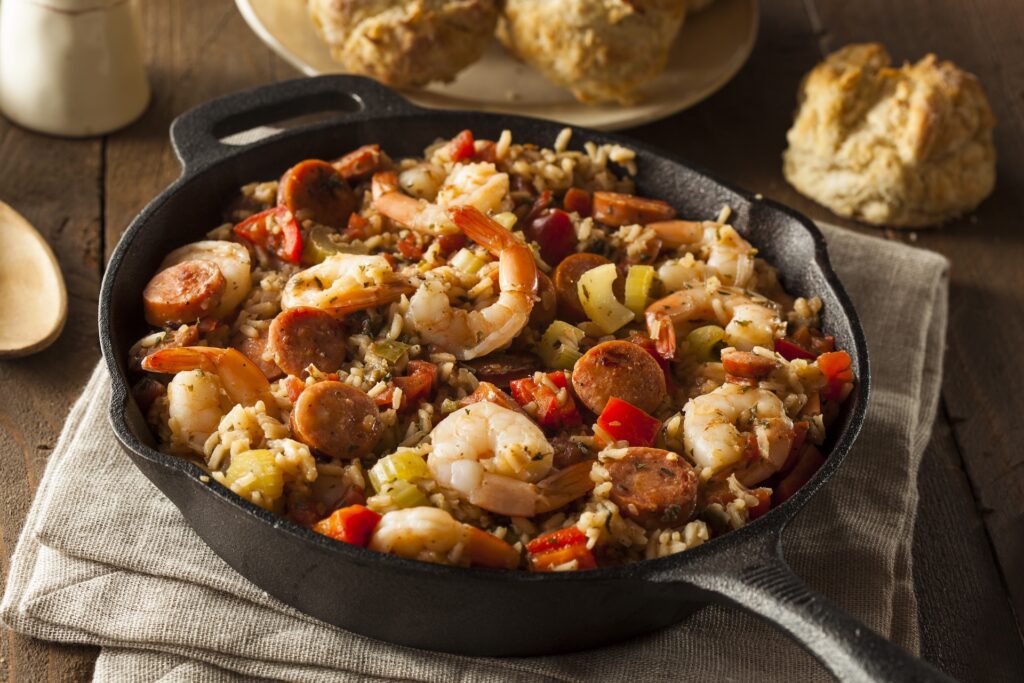
Typical Ingredients in Cajun Jambalaya
- Chicken, pork, or wild game
- Smoked sausage (andouille)
- Occasionally seafood, but less common than in Creole versions
- Holy Trinity vegetables
- Long-grain rice
- Bolder spice blends, often with cayenne and paprika
The cooking process begins with browning the meat deeply, then adding vegetables to absorb those flavors before the rice and stock go in. The result is smoky, earthy, and robust—a true reflection of rustic Cajun cooking.
Key Differences Between Creole and Cajun Jambalaya
| Aspect | Creole Jambalaya | Cajun Jambalaya |
|---|---|---|
| Tomatoes | Yes – gives a red color and tangy flavor | No – deep brown from browning meat |
| Main Proteins | Often seafood + sausage + chicken | More land meats like chicken, pork, game |
| Flavor Profile | Lighter, herbaceous, slightly sweet-tangy | Smoky, earthy, and bold |
| Origin | Urban (New Orleans, river towns) | Rural (bayous, countryside) |
| Cooking Time | Slightly shorter, layering flavors | Longer browning for depth |
Which Should You Try?
The truth is, you should try both. Creole jambalaya offers a bright, seafood-rich taste of the city, while Cajun jambalaya delivers the hearty, smoky flavors of the countryside. Each represents a different facet of Louisiana’s culture, and each is beloved in its own right.
Cultural Context
Creole cuisine developed in cosmopolitan port cities, influenced by global trade and diverse immigrant communities. Cajun cuisine, on the other hand, evolved from the resourcefulness of the Acadian settlers, adapting to local game, fish, and farm ingredients.
Final Thoughts
Whether you’re enjoying a tomato-laced Creole jambalaya in the French Quarter or a smoky Cajun version by a bayou campfire, you’re tasting centuries of history and tradition. Both styles are authentic, both are delicious—and together, they tell the full story of Louisiana.
Try Both Styles at Gallier’s
Why choose one when you can try both? At Gallier’s Seafood & Oyster Bar, we celebrate the best of both Creole food and Cajun cuisine. Our jambalaya is just one of many authentic Louisiana dishes you’ll find at our New Orleans seafood restaurant and oyster bar.
Pair your jambalaya with a dozen fresh Gulf oysters, a steaming bowl of gumbo, or a crispy shrimp po’boy. Looking for the best seafood near me in the French Quarter area? Reserve a table at Gallier’s.
Explore More Louisiana Flavors
- What Is Creole Food? A Deep Dive
- Cajun Seasoning Secrets
- What Is Boudin? Louisiana’s Cajun Sausage
- The Creole Trinity: Onion, Bell Pepper & Celery
- Chicken & Andouille Sausage: A Cajun Power Combo
Frequently Asked Questions About Jambalaya
Does Cajun jambalaya have tomatoes?
No. Cajun jambalaya (also called “brown jambalaya”) does not use tomatoes. It gets its color and flavor from browning the meat in the pot. Creole jambalaya (“red jambalaya”) uses tomatoes, giving it a reddish color and slightly sweeter flavor.
Which jambalaya is more popular in New Orleans?
Creole jambalaya (red) is more common in New Orleans, while Cajun jambalaya (brown) is more popular in rural Louisiana. At New Orleans seafood restaurants like Gallier’s, you’ll typically find Creole-style jambalaya on the menu.
What is the difference between jambalaya and gumbo?
Jambalaya is a rice-based dish where the rice cooks in the pot with the meat and vegetables. Gumbo is a thick soup or stew served over rice. Both are essential Creole food and Cajun cuisine dishes in New Orleans.
What meat goes best in jambalaya?
Traditional jambalaya uses andouille sausage, chicken, and Gulf shrimp. Creole versions often add oysters, crab, or crawfish. The combination of smoky sausage with fresh seafood is what makes Louisiana jambalaya unique.
Can I order jambalaya at Gallier’s Seafood & Oyster Bar?
Yes! Gallier’s menu features authentic New Orleans jambalaya alongside our famous oysters, gumbo, po’boys, and Gulf seafood. Visit our oyster bar at 129 Carondelet St.