Jump to the Flavor
New Orleans: Where Every Meal Is an Event
There are cities where you eat to live, and there are cities where you live to eat. New Orleans is firmly in the second category. This city’s food culture isn’t a sideline attraction — it’s the main event. The cuisine here has been shaped by centuries of French, Spanish, African, Caribbean, and Native American influences, all layered on top of one another and bound together by the bounty of the Gulf of Mexico and the Louisiana bayous.
If you’re visiting New Orleans for the first time, the sheer volume of food options can feel overwhelming. What do you try first? What can’t you miss? What’s the difference between Cajun and Creole? This guide breaks down the essential dishes every first-timer needs to eat, explains what makes each one special, and helps you navigate the New Orleans food scene with confidence.
Gumbo: The Soul of New Orleans
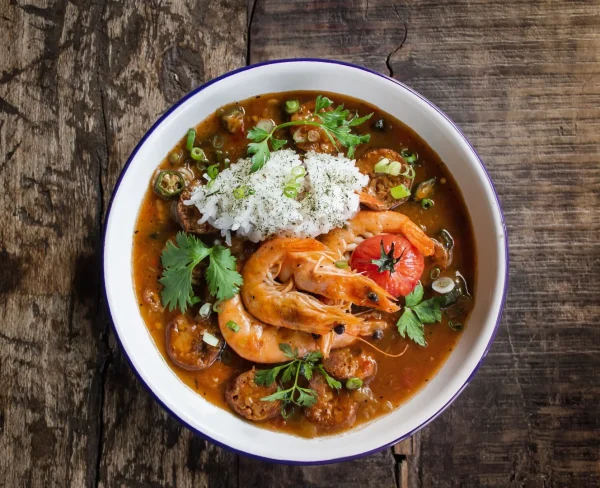
If you eat one thing in New Orleans, make it gumbo. This thick, rich stew is the city’s signature dish — a dark, complex bowl of flavor built on a slow-cooked roux (flour and fat cooked together until deep brown), the holy trinity of Cajun cooking (onion, celery, and bell pepper), and a rotating cast of proteins that can include andouille sausage, chicken, shrimp, crab, and oysters.
Every cook in Louisiana has their own gumbo recipe, and debating whose is best is a local sport. What makes gumbo so special is the depth of its flavor — the roux provides a nutty, almost chocolatey base, the trinity adds sweetness and aromatics, and the proteins bring richness and texture. It’s served over steamed white rice and often accompanied by potato salad on the side (a Louisiana tradition that confuses outsiders until they try it).
Read our complete guide to gumbo to understand the different styles and what to look for.
Po’Boys: The New Orleans Sandwich
The Po’Boy is to New Orleans what the cheesesteak is to Philadelphia — except it’s better. This iconic sandwich is built on crusty New Orleans French bread (lighter and crispier than a regular baguette) and filled with your choice of fried seafood, roast beef, or other fillings. The bread is crucial: it should have a shattering crust and a soft, pillowy interior that soaks up the juices without falling apart.
The classic Po’Boy order is “dressed,” which means it comes with lettuce, tomato, pickles, and mayonnaise. Fried shrimp and fried oyster Po’Boys are the most popular seafood versions, though roast beef with gravy (called “debris” for the shredded bits) is equally beloved. When you order, you’ll be asked: “dressed?” Say yes.
Learn everything about the Po’Boy, including its working-class origins and why the bread matters so much.
Jambalaya: Louisiana’s One-Pot Masterpiece
Jambalaya is Louisiana’s answer to paella and jollof rice — a hearty, one-pot rice dish loaded with meat, seafood, and bold seasoning. There are two main styles: Creole jambalaya (also called “red jambalaya”) includes tomatoes and is more common in New Orleans, while Cajun jambalaya (called “brown jambalaya”) skips the tomatoes and gets its color from browning the meat directly in the pot.
Both versions are built on the holy trinity, seasoned aggressively with cayenne, paprika, and garlic, and cooked so that the rice absorbs all the flavorful liquid. Andouille sausage is almost always present, along with chicken, shrimp, or a combination. Jambalaya is the ultimate communal dish — it feeds a crowd and tastes even better the next day.
Etouffee: Smothered in Flavor
Étouffée — from the French word meaning “smothered” — is a Cajun-Creole classic that showcases Louisiana’s love of rich, saucy dishes. Crawfish étouffée is the most traditional version: crawfish tails smothered in a thick, buttery sauce made with roux, the holy trinity, garlic, and a blend of spices, all served over steamed rice.
Shrimp étouffée is equally popular, especially outside of crawfish season. The sauce is the star — it should be silky, deeply flavored, and cling to every grain of rice. A good étouffée proves that Cajun cooking isn’t just about heat; it’s about building layers of flavor that make each bite more satisfying than the last.
Explore our guide to étouffée for the full story on this essential dish.
Oysters: Raw and Charbroiled
New Orleans is an oyster city. Gulf oysters are plump, briny, and available year-round, and the city has developed two signature ways to serve them.
Raw oysters on the half shell are the purest expression of Gulf seafood — shucked fresh, served cold on a bed of ice with lemon, horseradish, and cocktail sauce. Eating them is a ritual: a squeeze of lemon, a dab of sauce, tip the shell, and let the oyster slide onto your tongue. The flavor is clean, briny, and unmistakably oceanic.
Charbroiled oysters are a New Orleans invention. Fresh oysters are grilled over an open flame with garlic butter, herbs, and Parmesan cheese until they’re bubbling, smoky, and irresistible. If you’ve never been an oyster person, charbroiled oysters might convert you — the grilling tempers the brininess and adds a rich, savory dimension.
Read our guide to the best oysters in New Orleans for more on the oyster culture here.
Crawfish: Louisiana’s Seasonal Obsession
Crawfish season (typically January through June, peaking March through May) transforms New Orleans. These small freshwater crustaceans are boiled in huge batches with cayenne, garlic, lemon, and Cajun spices, then dumped onto newspaper-covered tables for a communal feast that can last hours.
Eating boiled crawfish requires a technique: twist the tail from the head, pinch the tail to extract the meat, and (if you’re brave) suck the flavorful juices from the head. Beyond the boil, crawfish appear in étouffée, bisque, pasta, pies, and fried preparations. It’s a versatile ingredient that Louisiana cooks have elevated into an art form.
Read our complete crawfish guide for everything you need to know about season, technique, and preparations.
Shrimp & Grits: Southern Comfort, NOLA Style
Shrimp and grits originated in the Lowcountry of South Carolina, but New Orleans has claimed it as its own. The city’s version features Gulf shrimp sautéed in rich sauces — BBQ butter, tasso cream, or Creole seasoning — served over slow-cooked stone-ground grits. The grits provide a creamy, comforting base, while the shrimp bring sweetness and the Gulf Coast flavor that defines the city’s seafood tradition.
It’s a dish that works at any meal — brunch, lunch, or dinner — and it’s one of the best introductions to the New Orleans approach of taking simple Southern staples and making them extraordinary.
Dive into our shrimp and grits guide for the full history and what makes the New Orleans version unique.
Beignets: The Iconic New Orleans Dessert
Beignets are deep-fried squares of dough buried under a mountain of powdered sugar. They’re served piping hot, three to an order, and best enjoyed with a cup of chicory coffee or café au lait. The outside is crispy and golden; the inside is light, airy, and slightly chewy.
Beignets are the French-influenced dessert that has become synonymous with New Orleans. They’re technically a type of French doughnut, but the New Orleans version — particularly as perfected by the famous Café du Monde in the French Quarter — has become an icon in its own right. They’re messy (the powdered sugar goes everywhere), addictive, and an absolute must for first-time visitors.
Red Beans & Rice: Monday Tradition
Red beans and rice is New Orleans’ Monday dish — a tradition born from practicality. Monday was traditionally laundry day, a labor-intensive chore that left little time for cooking. A pot of red beans could simmer on the stove all day, requiring minimal attention while the washing got done. By dinner, the beans had broken down into a creamy, savory stew, served over rice with andouille sausage or pickled pork.
Today, red beans and rice is served every day of the week in New Orleans restaurants, but many locals still make it on Mondays. The dish is deceptively simple: kidney beans slow-cooked with the holy trinity, garlic, bay leaves, thyme, and smoked pork until thick and creamy. The key is patience — the longer the beans cook, the better the flavor.
Muffuletta: The Italian-Creole Sandwich
The muffuletta is New Orleans’ other great sandwich, created by the Italian immigrant community in the early 20th century. It’s built on a large, round Sicilian sesame bread and layered with Italian cold cuts (salami, ham, mortadella), provolone cheese, and — most importantly — olive salad. The olive salad is what makes a muffuletta a muffuletta: a tangy, garlicky mix of chopped olives, giardiniera, capers, and olive oil that soaks into the bread and ties everything together.
Muffulettas are massive — a whole sandwich can easily feed two people. They’re served at room temperature (never toasted, purists insist), and the flavors actually improve as the olive salad has time to marinate into the bread. It’s a completely different experience from a Po’Boy, and both deserve a place on your New Orleans eating itinerary.
Understanding Cajun vs. Creole
You’ll hear the terms “Cajun” and “Creole” constantly in New Orleans, and understanding the difference helps you navigate menus with confidence.
Creole cuisine is the city cooking tradition. Born in New Orleans, it blends French, Spanish, African, and Caribbean influences. Creole cooking uses butter, tomatoes, and refined techniques. Think: gumbo with tomatoes, shrimp Creole, oysters Rockefeller.
Cajun cuisine comes from the rural Acadian communities of southwest Louisiana — French Canadians who settled in the bayous and prairies. Cajun food is earthier, spicier, and built around one-pot dishes. Think: brown jambalaya, boudin, cracklins, crawfish boils.
In modern New Orleans, the two traditions overlap constantly. Most restaurants serve dishes from both traditions, and many dishes — like gumbo and étouffée — exist in both Cajun and Creole versions. Don’t worry too much about the labels; focus on the flavors. Read our detailed comparison for more.
How to Plan Your Eating in New Orleans
With so many essential dishes to try, here’s a practical approach to making sure you hit the highlights:
Day 1: The Classics
- Lunch: Gumbo + Po’Boy — the two most iconic dishes in a single meal.
- Dinner: Oysters (raw and charbroiled) + a seafood entree like crawfish pasta or the fried seafood platter.
Day 2: Deep Cuts
- Brunch: Shrimp & Grits + beignets with chicory coffee.
- Dinner: Jambalaya or étouffée + a muffuletta to share.
Day 3: Fill the Gaps
- Lunch: Red beans and rice (especially if it’s Monday).
- Dinner: Whatever you loved most on Days 1 and 2 — no shame in repeat visits.
The beauty of New Orleans is that you can try several dishes in a single meal. Cups of gumbo, half Po’Boys, and shared platters all let you sample broadly without overcommitting to a single dish.
Start Your New Orleans Food Journey at Gallier’s
Gallier’s Seafood & Oyster Bar at 129 Carondelet St in the CBD offers many of the essential dishes on this list under one roof: a bowl of Gumbo ($18), Po’Boys (from $21), Jambalaya ($17), Shrimp & Grits ($11), Seafood Penne Pasta with shrimp and crawfish ($26), the Seafood Platter ($33), and oysters served raw and charbroiled. It’s a perfect starting point for first-timers who want to experience authentic New Orleans cuisine without hopping between a dozen restaurants.
Our location between the French Quarter and the CBD puts you at the center of everything, and our menu reads like a checklist of the dishes in this guide. Whether you’re here for a day or a week, we’ll make sure your first taste of New Orleans is one you remember.
Start eating your way through New Orleans.
Call (504) 267-5672 or make a reservation at Gallier’s.
129 Carondelet St, New Orleans, LA 70130 — Open daily for lunch and dinner.